

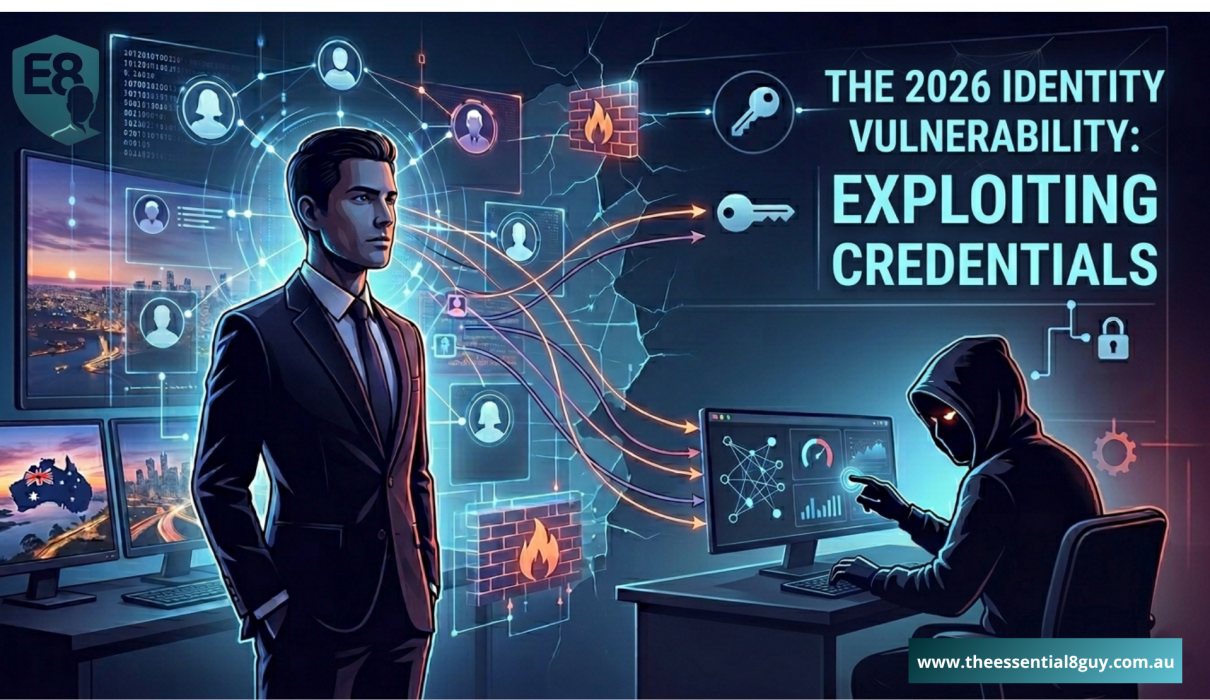
In March 2026, the Australian Signals Directorate (ASD) confirmed a significant shift in the threat landscape. For years, we focused on hackers as shadowy figures trying to break through firewalls. But the data is clear, the most successful attacks today Do not involve breaking anything. Instead, attackers are simply logging in using legitimate credentials.
We are currently in the middle of a global Identity Crisis.
Recent reports show that identity-based attacks played a material role in nearly 90% of security investigations this year. This is not just about stolen passwords, it is a systemic failure of how we verify who is sitting behind a screen. Whether it’s an employee, a vendor, or an automated service account, the ability to prove who is who is being exploited at scale. This makes resolving the Identity Crisis the single most important objective for Australian businesses in 2026.
1. Understanding the 2026 Identity Crisis
The perimeter of a modern business is no longer a physical office or even a VPN. It is the login screen. This shift is why a comprehensive Cyber Security Audit now begins with a deep dive into your Identity Crisis vulnerabilities.
The Rise of Session Hijacking
While phishing remains a threat, 2026 has seen the explosion of Session Hijacking. When you log into a cloud platform, your browser stores a token so you stay logged in. Attackers are now stealing these tokens directly from user devices. Because the token says the user is already authenticated, the attacker can bypass Multi-Factor Authentication (MFA) entirely. They do not need your password or your phone; they have the Golden Key.
Managing third-party AI sub processors is a critical part of maintaining data sovereignty and protecting your organization’s identity footprint.
You May Also Like- How to Disable Anthropic Models Enabled by Default – MC1193290
AI-Driven Impersonation
We are also seeing a surge in highly interactive voice-based social engineering. Using AI-generated voice cloning, attackers can impersonate executives or IT staff with frightening accuracy to convince employees to reset passwords or hand over sensitive access. To defend against this Identity Crisis, your Cyber Security Audit must evaluate your internal verification protocols beyond just digital checks.
2. The Technical Accelerator – The Ni8mare Exploit
The Identity Crisis is not just a human problem; it’s an automation problem. This was proven earlier this month with the disclosure of Ni8mare, a critical vulnerability in automation platforms used by many firms to connect their various apps.
Why this matters for Identity
Automation platforms use Service Accounts with high-level permissions. If an attacker uses the Ni8mare exploit to gain access to that hub, they are not just one user, they are a super-user with the identity of the system itself. This creates an Identity Crisis where an attacker becomes a trusted part of your network and moves through your business without ever triggering an alarm.
3. Building the Shield – Essential Eight Compliance
To survive this Identity Crisis, Australian firms are turning to the ASD Maturity Model. It provides a structured, evidence-based roadmap to harden your infrastructure. However, in 2026, you must implement these strategies with an identity-first mindset.
Multi-Factor Authentication (MFA)
Standard MFA like receiving a code via text is no longer considered secure enough to solve the Identity Crisis at Maturity Level 2.
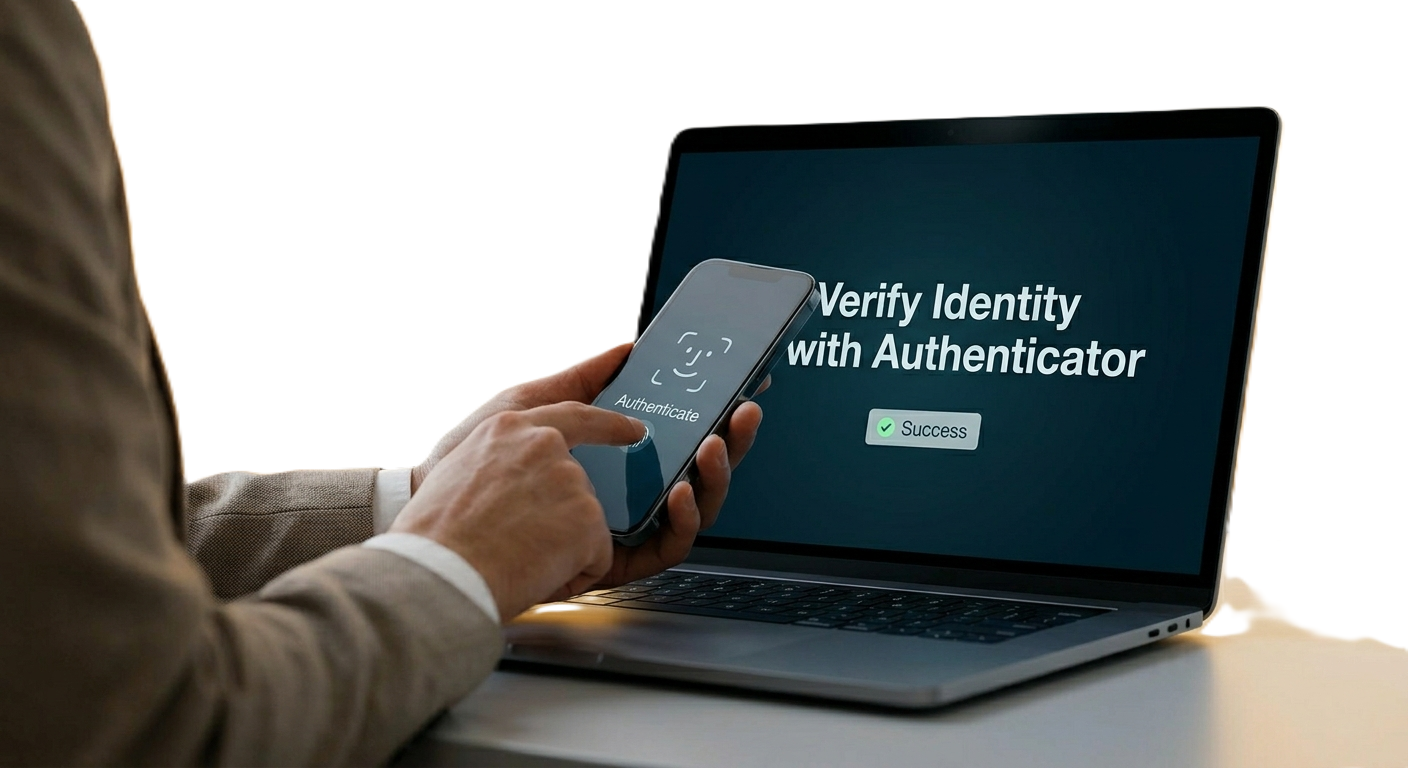
- The 2026 Requirement- To ensure Essential Eight Compliance, firms are moving to Phishing-Resistant MFA. This uses physical security keys or biometrics that create a unique bond between the device and the service, stopping session hijacking in its tracks.
Restricting Administrative Privileges
The Identity Crisis becomes a catastrophe when an Admin account is compromised. If every staff member has system-wide permissions, one stolen login can end the business.
The Solution- We now use Just-In-Time (JIT) Privileged Access. This means nobody has standing admin rights. If a technician needs to fix something, they are granted the identity of an admin for a specific window of time only.
Application Control
If an attacker exploits the Identity Crisis to steal a login, their first move is usually to run a script to harvest data. Application Control ensures that even with a valid login, the attacker cannot run unapproved software, providing a critical fail-safe.
4. The Business Reality – Insurance and Supply Chain Trust
I often hear from directors that security is an IT cost. In 2026, navigating the Identity Crisis is a financial requirement.
- Cyber Insuranc- Insurers now review security controls before issuing policies. If you cannot demonstrate that you have reached Maturity Level 2 in managing the Identity Crisis, you may face astronomical premiums or be denied coverage.
- Supply Chain- Large enterprises and government bodies now audit their partners. If you provide services to a larger firm, they will eventually ask for proof of your ASD Maturity Model status. Your security posture is your business’s Credit Score in this year.
5. Moving Toward a Secure-by-Design Future
We have to stop thinking of security as something we add to a network after it’s built. A Secure-by-Design philosophy means we assume the environment is hostile from the start.
- Assume Compromise- Build your network so that if one identity is stolen, the attacker is trapped and can’t see the rest of the business.
- Focus on Hygiene- Regularly review your accounts to find ghost logins from former employees. Keeping your identity list clean is a primary step in the ASD Maturity Model.
- Embrace Resilience- Security is about having the controls in place to ensure the business does not skip a beat even if a login is compromised.
6. Your 2026 Roadmap
The Identity Crisis is the defining challenge of our year. By following Essential Eight Compliance, you are building a professional, hardened infrastructure.
- Upgrade your MFA- Move toward Phishing-Resistant methods to meet Maturity Level 2.
- Audit your identities- Ensure you know every person and automated tool that has access to your data through a regular Cyber Security Audit.
- Harden your systems- Align with the ASD Maturity Model to limit the impact of any single identity breach.
Is Your Firm Ready for the 2026 Identity Shift?
Most leaders feel they are doing enough, but the surge in session hijacking and AI impersonation has proven that the Identity Crisis has made last year’s standard obsolete.
Do not wait for a denied insurance claim to find out where your gaps are. Whether you are navigating Essential Eight Compliance for a contract or you just want to make sure your firm is genuinely resilient, I am here to help.
DM me now for a consultation. We will skip the robotic jargon and do a human-led Cyber Security Audit of your environment. We will find the stale accounts, fix the weak MFA, and build a tailored roadmap to reach Maturity Level 2 in the ASD Maturity Model.
Let’s take your business from being a target to being resilient. Send me a message today.